 Day 18
An Echo of Faith and Faithfulness Opening Prayer Heavenly Father, we bow before you in gratitude for the faith that unites us and for those who have gone before us as our encouragers and examples in the faith. Open our hearts to the sanctifying power of your Word, and may our lives be a joyful echo of the love, hope, and faith found in Christ. In Jesus’ name, we pray. Amen. Scripture Reading 1 Thessalonians 1:2-10 2 We always thank God for all of you and continually mention you in our prayers. 3 We remember before our God and Father your work produced by faith, your labor prompted by love, and your endurance inspired by hope in our Lord Jesus Christ. 4 For we know, brothers and sisters loved by God, that he has chosen you, 5 because our gospel came to you not simply with words but also with power, with the Holy Spirit and deep conviction. You know how we lived among you for your sake. 6 You became imitators of us and of the Lord, for you welcomed the message in the midst of severe suffering with the joy given by the Holy Spirit. 7 And so you became a model to all the believers in Macedonia and Achaia. 8 The Lord’s message rang out from you not only in Macedonia and Achaia—your faith in God has become known everywhere. Therefore we do not need to say anything about it, 9 for they themselves report what kind of reception you gave us. They tell how you turned to God from idols to serve the living and true God, 10 and to wait for his Son from heaven, whom he raised from the dead—Jesus, who rescues us from the coming wrath. The Great Tradition For to give thanks to God for them is the act of one testifying to how they have advanced in the faith. Not only are the Thessalonians praised by Paul, but Paul thanks God for them, as though God himself had accomplished everything. Paul also teaches them to be moderate in their self-estimation, all but saying that all their growth is from the power of God. (Chrystostom) Prayer of Confession Forgiving Father, in the busyness of life, we confess that we sometimes neglect the active expression of our faith. We acknowledge moments when joy eludes us in the midst of challenges, and idols subtly take precedence over our devotion to you. Have mercy on us, cleanse our hearts, and guide us in the path of transforming grace. In the name of Jesus, we humbly pray. Amen. Reflection Good Shepherd, thank you for those who have shepherded me throughout my life and faith. For those who have led, fed, protected, healed, cared for, and loved me, I offer you my deepest gratitude. These are the very men and women who have modeled faith and godliness for me. I have been impacted in rich ways I will never be fully aware of, but also in many ways in which I am. Thank you for sending these people into my life O Lord, because I know every good gift is from you, including these shepherds and models of faith. God, I pray that you will continually fill me with power from your Spirit, as you did the Thessalonians, for I cannot persevere without your gracious strength and stamina. Your Spirit animates my faith and life, from first to last, and I am lost without his presence living in and through me. I humbly pray that my efforts of feebly attempting to imitate the godliness of those who have come before me will serve others on their journeys of faith as well. Like the Thessalonians, I pray that your truth will ring out by the example of my life, so that others might see and hear it and give you glory and praise and come to know you savingly. I praise you for the resurrection of the Lord Jesus Christ and for rescuing me from the coming wrath. Please enable my “Christian ringing” to be an attractive echoing of grace, truth, and love, even in its urgency, instead of a clanging gong that drives others away from you. Let my message be your message and help me to trust you in all of it. Remind me that you will bring forth the fruit, not me. You call me to be faithful to you, regardless of how the world hears me. Give me faithfulness each day dear Lord. In Christ’s name I pray. Amen. Key Principles
Walking Points
Conclusion This Advent season, may the joy of the Thessalonians inspire us to express our faith dynamically. Let our actions, prompted by love, be a testament to the life-changing power of the Gospel. In imitating Christ and turning from our own idols, may our lives echo the Lord’s message, bringing hope to a world in need. May this Advent be a time of renewed commitment, good works, and anticipation for the glorious return of our Savior. Amen.
0 Comments
 Day 17
Patiently We Wait Opening Prayer Heavenly Father, as we embark on this Advent journey, we come before you with hearts full of gratitude for the hope found in the coming of our Lord and Savior, Jesus Christ. Grant us wisdom and understanding as we reflect on your Word and guide us in living lives that proclaim your grace to the world. In Jesus’ name, we pray. Amen. Scripture Reading 2 Peter 3:1-10 Dear friends, this is now my second letter to you. I have written both of them as reminders to stimulate you to wholesome thinking. 2 I want you to recall the words spoken in the past by the holy prophets and the command given by our Lord and Savior through your apostles. 3 Above all, you must understand that in the last days scoffers will come, scoffing and following their own evil desires. 4 They will say, “Where is this ‘coming’ he promised? Ever since our ancestors died, everything goes on as it has since the beginning of creation.” 5 But they deliberately forget that long ago by God’s word the heavens came into being and the earth was formed out of water and by water. 6 By these waters also the world of that time was deluged and destroyed. 7 By the same word the present heavens and earth are reserved for fire, being kept for the day of judgment and destruction of the ungodly. 8 But do not forget this one thing, dear friends: With the Lord a day is like a thousand years, and a thousand years are like a day. 9 The Lord is not slow in keeping his promise, as some understand slowness. Instead he is patient with you, not wanting anyone to perish, but everyone to come to repentance. 10 But the day of the Lord will come like a thief. The heavens will disappear with a roar; the elements will be destroyed by fire, and the earth and everything done in it will be laid bare. The Great Tradition All those who love our Lord’s return must have a balanced approach to the whole question. We must not think that it is so near that it will come before time, but neither must we think that it will not come until much later. Rather we must be careful to make sure that, whether Christ comes sooner or later, he will find us ready and waiting for him when he appears. (Bede) Prayer of Confession Forgiving Father, in our impatience, we confess moments when we have doubted your timing and questioned your promises. Forgive us for times when we have failed to live in active expectation of your return and neglected opportunities to share your grace with others. Renew our spirits, and help us to walk in your patient love. In the name of Jesus, we pray. Amen. Reflection Gracious God, we give you thanks, on this day of Advent, for the coming of our Lord, Savior, and King, Jesus Christ. You remind us in the gospels that he would be named Jesus for he would save his people from their sins. He is Lord and King of all and Savior of all who call upon him. That you love us and are mindful of even us, we give you our thanks this day. Father, in a day when “scoffers” will come and deny and/or reject the proclamation and truths of the Gospel of Jesus Christ, we pray for your protection and edification. Strengthen us to stand firm. Yet we pray for loving and tender hearts that help us to not turn our backs on such scoffers, but to patiently reach out to them with the good, life-giving, and life-transforming news of the advent of the Lord Jesus Christ. Remind us of that time, when things looked bleakest during those three days our Lord was in the tomb, that it was also your plan to raise him from the dead. Remind us again that there will be those who cry out, “Where is this ‘coming’ he promised? Ever since our ancestors died, everything goes on as it has since the beginning of creation.” Remind us through your Spirit and inspired Word, that life and history are moving according to your providential plan, and thus, we needn’t worry or turn away from the path you have set before us. As the venerable Bede put it, “Rather we must be careful to make sure that, whether Christ comes sooner or later, he will find us ready and waiting for him when he appears.” Furthermore, we’re able to wait because we know that “with the Lord a day is like a thousand years, and a thousand years are like a day. The Lord is not slow in keeping his promise, as some understand slowness.” Father, you are caught off guard by nothing; our universe, and all within it, move according to your gracious and sovereign will. Moreover, you are “patient with [us], not wanting anyone to perish, but everyone to come to repentance.” Therefore, in one sense, let us rejoice for every “extra” day our Lord does not return. Let us think of each day as a day of grace, a day for disciples of Jesus Christ to boldly and lovingly declare to scoffers and seekers alike that today can be the day of their salvation. Let us encourage them to put their trust today in the babe of Bethlehem, the Lord Jesus Christ. How good our God is to exercise such patience with us and “delay” his return so that “everyone” may turn to him in repentant faith. Father, one day it will be too late for us to turn to you in repentance and faith. We pray for each and every person who has not yet done so. We pray that today would be the day of their salvation. Move them through the power of your Spirit. Give them eyes to see and ears to hear. Speak through us and others whom you have redeemed and reconciled to yourself. Our lives are different now because of who you are and what you have done in our lives through Christ the Lord. Let our words and lives awaken others to that possibility in their lives. For it is your desire. Key Principles
Walking Points
Conclusion As we journey through this Advent season, may we be filled with hope and anticipation for the coming of our Lord. Let’s remember that his advent brings redemption, light, and victory over darkness. In a world of skepticism, let’s stand firm in our faith and lovingly share the good news of Jesus Christ. May we trust in God’s timing, knowing that he is patient and desires the salvation of all. As we wait, let’s be ready and actively proclaim the message of hope to those who have not yet turned to Christ. May the Advent season deepen our faith, transform our lives, and draw us closer to the one true King, Jesus Christ. Amen.  Day 16
A Time of Preparation Opening Prayer “Most merciful God, who so loved the world as to give thine only begotten Son, that whosoever believeth in him should not perish but have everlasting life: Grant unto us, we humbly pray thee, the precious gift of faith, that we may know that the Son of God is come, and may have power to overcome the world and gain a blessed immortality; through Jesus Christ our Lord. Amen.” (Methodist Book of Worship, 1965) Scripture Reading Matthew 25:1-13 “At that time the kingdom of heaven will be like ten virgins who took their lamps and went out to meet the bridegroom. 2 Five of them were foolish and five were wise. 3 The foolish ones took their lamps but did not take any oil with them. 4 The wise ones, however, took oil in jars along with their lamps. 5 The bridegroom was a long time in coming, and they all became drowsy and fell asleep. 6 “At midnight the cry rang out: ‘Here’s the bridegroom! Come out to meet him!’ 7 “Then all the virgins woke up and trimmed their lamps. 8 The foolish ones said to the wise, ‘Give us some of your oil; our lamps are going out.’ 9 “ ‘No,’ they replied, ‘there may not be enough for both us and you. Instead, go to those who sell oil and buy some for yourselves.’ 10 “But while they were on their way to buy the oil, the bridegroom arrived. The virgins who were ready went in with him to the wedding banquet. And the door was shut. 11 “Later the others also came. ‘Lord, Lord,’ they said, ‘open the door for us!’ 12 “But he replied, ‘Truly I tell you, I don’t know you.’ 13 “Therefore keep watch, because you do not know the day or the hour. The Great Tradition “The wise virgins are those who, embracing the time available to them, were prepared at the first onset of the coming of the Lord. But the foolish were those who were lax and unmindful. They troubled themselves only over present matters and, forgetting what God said, did not direct their efforts toward hope for resurrection.” (Hillary of Poitiers) Prayer of Confession “Lord, so often we have tended to take the salvation you came to bring the world for granted and we have forgotten the price you paid that we might have eternal life. Forgive us, Lord, and where there are those who need to hear the Good News, send us; and where there are those who need your ministry, lead us to their side. In the holy name of Christ, we pray. Amen.” (James R. Wilson) Reflection We sometimes forget that the season of Advent is a time of repentance. That is how the early church thought of it. We often think of repentance as purely a Lenten emphasis. That is because we focus primarily on the first coming (advent) of our Lord. However, if you have been keeping up with these Advent devotions, you have no doubt noticed the number of Scriptural texts that focus on the Lord’s return, (second advent), on being ready for “the Day of the Lord, etc. Today’s text is no exception. Perhaps you have heard the saying, “Don’t be so heavenly-minded that you are no earthly good.” But those Christians who have made the greatest impact throughout Christian history are those who have been so heavenly-minded that they couldn’t help but be earthly good. That’s because they took the words of Scripture seriously. When our Lord calls us to “watch,” he is not commanding us to sit on the top of a mountain and think spiritual thoughts. While we do want to have the mind of Christ (1 Corinthians 2:16) and let our hearts and minds dwell in heaven (Colossians 3:1-2), that doesn’t mean we never leave our proverbial (or literal) prayer closets. Instead, we faithfully watch and wait for the Lord by bearing witness and serving in his name. That is why hospitals, schools, orphanages, and a whole array of evangelistic, mercy, and justice ministries have been around for as long as the church. And yes, we worship, pray, read and study Scripture, enjoy the fellowship of the saints and more. It’s a both/and form of discipleship and not an either/or. Therefore, let us be like the wise virgins who were prepared for the bridegroom’s return. Let us be like the wise man who built his house upon the rock who (Matthew 7), according to Jesus, not only listened to the words of Jesus, but also obeyed them. Key Principles
Walking Points
Conclusion As we navigate this Advent season, let us observe the timeless lesson of the wise virgins. May we embrace both contemplation and action, taking Scripture seriously, and maintaining a vigilant, enduring faith. Let our lives be a testament to the active readiness of our Lord’s return, ever prepared and watchful. In Jesus’ name, we pray. Amen.  Day 15
Advancing the Kingdom Opening Prayer “O God, who has set before us the great hope that thy kingdom shall come on earth, and has taught us to pray for its coming: Make us ever ready to thank thee for the signs of its dawning, and to pray and work for that perfect day when thy will shall be done on earth as it is in heaven; through Jesus Christ our Lord. Amen.” (Methodist Book of Worship, 1965) Scripture Reading Matthew 11:7-15 7 As John’s disciples were leaving, Jesus began to speak to the crowd about John: “What did you go out into the wilderness to see? A reed swayed by the wind? 8 If not, what did you go out to see? A man dressed in fine clothes? No, those who wear fine clothes are in kings’ palaces. 9 Then what did you go out to see? A prophet? Yes, I tell you, and more than a prophet. 10 This is the one about whom it is written: “ ‘I will send my messenger ahead of you, who will prepare your way before you.’ 11 Truly I tell you, among those born of women there has not risen anyone greater than John the Baptist; yet whoever is least in the kingdom of heaven is greater than he. 12 From the days of John the Baptist until now, the kingdom of heaven has been subjected to violence, and violent people have been raiding it. 13 For all the Prophets and the Law prophesied until John. 14 And if you are willing to accept it, he is the Elijah who was to come. 15 Whoever has ears, let them hear. The Great Tradition People did not believe in John the Baptist. The works of Christ were held to be of no importance. His torment on the cross was a stumbling block. “Until now” prophecy has been dormant. But now the law is fulfilled. Every prediction is finished. The spirit of Elijah is sent in advance through John’s words. Christ is proclaimed to some and acknowledged by others. He is born for some and loved by others. The violent irony is that his own people rejected him, while strangers accepted him. His own people speak ill of him, while his enemies embrace him. The act of adoption offers an inheritance, while the family rejects it. Sons refuse to accept their father’s last will, while the slaves of the household receive it. This is what is meant by the phrase “the kingdom of heaven suffers violence.” Earlier expectations are being torn apart. The glory that was pledged to Israel by the patriarchs, which was announced by the prophets and which was offered by Christ, is now being seized and carried off by the Gentiles, through their faith. (Hilary) Prayer of Confession “Lord, we wait for a new heaven and a new earth where righteousness will reign, but we confess we have not been leading lives of holiness and godliness. We know that your Son came into the world to show us the way, but while we sing ‘Joy to the world, the Lord is come,’ we have failed to be faithful disciples. Forgive us we pray, and through your Holy Spirit enable us so to live that we might help your kingdom to come, and your will be done here on earth. Amen.” Reflection One of the emphases of my ministry is to call followers of Christ to “extend the Kingdom of God into every sphere of life.” The word “extend” means to stretch, lengthen, prolong, continue, expand, enlarge, offer, put forth, give, impart, and present, just to name a few. While each of those words is similar, each represents a slightly different emphasis which is key in understanding our Christian mission. Interestingly, the 1984 NIV translation of our Scripture emphasizes God’s Kingdom as “advancing.” This has a military ring to it. Jesus adds that forceful (violent, NIV 2011) people lay hold of this forcefully advancing Kingdom. My NIV footnote says, “They enter the kingdom and become Christ’s disciples. To do this takes spiritual courage, vigor, power, and determination because of ever-increasing persecution.” John Piper says advancing the Kingdom of God in such a way requires a “wartime mentality.” The Kingdom of heaven is forcefully advancing yet the kingdom of darkness actively resists it. As people seeking godliness, we are daily fighting for our lives and for the lives of those we love and who’ve been entrusted to our care. The world, the flesh, and the devil are formidable adversaries. If we do not maintain a wartime mentality, being ever vigilant and standing firm in our faith, then we, and those we love, will suffer the ravages of war, the consequences of our poor preparation. Therefore, we must fight the good fight of faith. We must enter the battle through the narrow gate, for wide is the gate and broad is the road that leads to destruction, and many enter through it. But small is the gate and narrow the road that leads to life and only a few find it (Matthew 7:13-14). This narrow gate is Jesus himself. Living life as his disciple means entering into new life through him and traveling the “Kingdom road” he has set before us, regardless of how narrow and hard it is. Peter says many will leave this Kingdom road and wander off because they love the wages of wickedness (2 Peter 2:15), which results in death (Romans 6:23). The battle rages all around us, but we must stand firm in our faith, or we will not stand at all (Isaiah 7:9). Standing firm takes a wartime mentality. We cannot assume we are ever safe from attack. We must be ever watchful and on guard. We are called, commanded, and expected to fight, persevere, press on, and stand firm. But we are never asked to do this in our strength, but the Lord’s. The wonderful paradox of Scripture is that while we persevere, our hope is not in ourselves. Our hope is in the Lord. The battle is ultimately his. Forceful people lay hold of the Kingdom of God, which our Lord causes to advance in and through his power. Therefore, we work through his power (Colossians 1:29). God’s Kingdom advances as faithful followers of Christ represent their King in every sphere of their lives, even in enemy-occupied territory. Such a faithful witness will not be easy. After all, it is a war. There will be a cost which we’re commanded to consider before we enter the fray. The enemy shoots his fiery darts at us daily (Ephesians 6:16). He hides and waits to devour us (1 Peter 5:8). The world sends out its false teachers to lead us astray (2 Peter 2:1ff). In John 17, Jesus does not pray to take us out of such a world, but all throughout Scripture our Lord promises to never leave us nor forsake us. More than that, he fights on our behalf. And in so doing, he advances his Kingdom. Don’t you want to be a part of such a glorious Kingdom? Don’t you want to know such a glorious King? This Advent season we celebrate the King who was born in a manger and ultimately overcame the world. We are called to continue his mission. Key Principles
Walking Points
Conclusion As we immerse ourselves in the Advent season, let’s embrace a “wartime mentality” in the advancement of God’s Kingdom. Let’s prayerfully and dependently recognize the opposition, stand firm in the faith, and engage in the battle with the assurance that the ultimate victory belongs to our Lord. May this Advent be a season of the intentional and courageous extension of God’s Kingdom into every sphere of our lives. In the words of Jesus, “Whoever has ears, let them hear” the call to actively participate in the forceful advance of the Kingdom. Amen.  Day 14
A Call to Trust and Hope Opening Prayer “Blessed Lord, who caused all Holy Scripture to be written for our learning: Grant us so to hear them, read, mark, learn, and inwardly digest them, that by patience and the comfort of your holy Word we may embrace and ever hold fast the blessed hope of everlasting life, which you have given us in our Savior Jesus Christ; who lives and reigns with you and the Holy Spirit, one God, for ever and ever. Amen.” (Book of Common Prayer 2019) Scripture Reading Psalm 37:1-9 1 Do not fret because of those who are evil or be envious of those who do wrong; 2 for like the grass they will soon wither, like green plants they will soon die away. 3 Trust in the Lord and do good; dwell in the land and enjoy safe pasture. 4 Take delight in the Lord, and he will give you the desires of your heart. 5 Commit your way to the Lord; trust in him and he will do this: 6 He will make your righteous reward shine like the dawn, your vindication like the noonday sun. 7 Be still before the Lord and wait patiently for him; do not fret when people succeed in their ways, when they carry out their wicked schemes. 8 Refrain from anger and turn from wrath; do not fret—it leads only to evil. 9 For those who are evil will be destroyed, but those who hope in the Lord will inherit the land. The Great Tradition The “land” here indicates the heart of the listener and his soul. We are ordered, therefore, to indwell this land, that is, not to stray far from it, not to run to and fro, far and near, but to dwell and to stand firm within the bounds of our spirits and to consider the land very carefully and to become its tiller just as Noah was and to plant in it the vine and till the land that is within us, “to renew the fallowed ground of our spirits and sow not among the thorns.” Namely, let us purge our spirit from faults, and let us refine rough and harsh ways with the gentleness and the imitation of Christ, and thus finally we may feed from its wealth. (Origen) Prayer of Confession “O God, we give you thanks for the gift of love which you have bestowed upon us with the coming of your Son, Jesus Christ, whose birth we are preparing to celebrate. We know that nothing can separate us from your love, for your love is stronger than all the forces of evil. Forgive us, therefore, when we doubt the power of your love, and trust instead in the power of might, the weapons of war and destruction. Strengthen our convictions and make us instruments of your peace. Amen.” (H. Burnham Kirkland) Reflection I love the order of this Psalm. Verse 1 – Do not fret… Verse 3 – Trust in the Lord and do good… Verse 4 – Take delight in the Lord… Verse 5 – Commit your way to the Lord; Trust in him… Verse 7 – Be still before the Lord and wait patiently for him… Verses 7-8 – Do not fret and refrain from anger… Verse 9 – Hope in the Lord… How can you abstain from fretting and becoming angry and, instead, hope in the Lord? The Psalmist’s answer is, trust in him, take delight in him, commit your way to him, be still before him, and wait patiently for him. Each of these should be meditated upon. In fact, plan on doing that before the sun goes down today. Take one of these verses and ponder its significance and application in your life. For example, what changes would have to be made in your life to “trust in the Lord and do good,” and to “dwell in the land and enjoy safe pasture” (verse 3)? It never occurred to me what Origen said about the land being the heart and soul of the listener. He then directs us to nurture this land. We should tend the soil of our heart and soul and not stray into other lands where such attention will no longer be maintained and thus allow weeds to grow. I can’t help but think of Jesus’ parables of the Sower and the Weeds found in Matthew 13:1-30. Another question to ask God about this text, perhaps an even better one, would be to ask what blessings would flow into your life by “trusting, doing, dwelling, and enjoying” in this way. Moreover, what blessings would flow from your life into the lives of others because you are tending the garden of your heart and soul and enjoying its fruit? That’s a lot for us to think about and that’s just skating along the surface of only one part of one verse. So, let me encourage you to spend some time on these verses today and prayerfully discern which of them God is using to speak to you at this time and place in your life. Key Principles
Walking Points
Conclusion As we navigate the Advent season, I pray you will dwell in the land of trust and hope, following the wisdom of the Psalmist. Let’s nurture the soil of our hearts, cultivating a space where the Word of God can take root and flourish. In the stillness of waiting, may we find joy in the Lord and discover the fulfillment of our heart’s desires. This Advent may our lives be a glowing testimony to the power of trusting, delighting, and patiently waiting on the Lord. In the name of our faithful Savior Jesus Christ, we pray. Amen.  Day 13
Vigilance During Advent Opening Prayer “Thank you, my God, for the Good News which awaits my coming to you today, and always. Thank you for the grace and mercy which promise to set me free of all the sins and disappointments of life which hinder me on my journey toward your kingdom.” (Rueben Job) Scripture Reading Matthew 24:32-44 36 “But about that day or hour no one knows, not even the angels in heaven, nor the Son, but only the Father. 37 As it was in the days of Noah, so it will be at the coming of the Son of Man. 38 For in the days before the flood, people were eating and drinking, marrying and giving in marriage, up to the day Noah entered the ark; 39 and they knew nothing about what would happen until the flood came and took them all away. That is how it will be at the coming of the Son of Man. 40 Two men will be in the field; one will be taken and the other left. 41 Two women will be grinding with a hand mill; one will be taken and the other left. 42 “Therefore keep watch, because you do not know on what day your Lord will come. 43 But understand this: If the owner of the house had known at what time of night the thief was coming, he would have kept watch and would not have let his house be broken into. 44 So you also must be ready, because the Son of Man will come at an hour when you do not expect him. The Great Tradition “All who listen to the depths of the gospel and live it so completely that none of it remains veiled from them care very little about whether the end of the world will come suddenly and all at once or gradually and little by little. Instead, they bear in mind only that each individual’s end or death will arrive on a day and hour unknown to him and that upon each one of us “the day of the Lord will come like a thief.” It is important therefore to be vigilant, whether in the evening (that is, in one’s youth) or in the middle of the night (that is, at human life’s darkest hour) or when the cock crows (at full maturity) or in the morning (when one is well advanced in old age). When God the Word comes and brings an end to the progress of this life, he will gather up the one who gave “no sleep to his eyes nor slumber to his eyelids”10 and kept the commandment of the One who said, “Be vigilant at all times.” (Origen) Prayer of Confession “Almighty God, we who are aware of your power made known to us in the Babe of Bethlehem, realize that we ought to prepare the way for your coming into the lives of others. You have given us the task of witnessing to the hope for renewal that you hold out to all, but we confess that we have not always taken up our responsibility. Forgive us for our shortcomings, Lord, and encourage us as we try to proclaim the good news that Christ came into the world that everyone might have life and have it abundantly. In Jesus’ name we pray. Amen.” (H. Burnham Kirkland) Reflection There was a day when biblical texts like today’s Scripture unnerved me. The thought of Jesus returning in the middle of this sentence was more than I could handle. But why? What could a Christian desire more than to be in the immediate and unveiled presence of his or her Lord? And yet, when I was in college, I wanted Jesus to return, but only AFTER I graduated, then AFTER I got married, then AFTER my children were born, etc. I feel silly even typing that sentence. I resonate with Origen’s take on this verse very much. He wrote, “All who listen to the depths of the gospel and live it so completely that none of it remains veiled from them care very little about whether the end of the world will come suddenly and all at once or gradually and little by little.” The truth is, we will each stand before the Lord, whether he returns tonight while we’re sleeping or not. Thus, we are called and commanded to faithfully live each day as though it was our last, making the most of the time given us… never being presumptuous (and mistaken) about a guaranteed tomorrow. However, we should not miss the point of our Lord’s warning. Because we do not know when our Lord will return, we had better make sure we are presently in a right relationship with him. I don’t know if it’s ignorance or arrogance to assume one will have ample time to make a deathbed confession in order to get one’s “fire and life insurance” before death takes hold of them. Moreover, even if a person received notice that today was their last, if they didn’t care about Christ and the things of God enough to trust and follow him before, what makes them think they will be able to muster the sincerity of a true confession later? Therefore, Jesus says, “keep watch,” for we do not know when he will return. We want to be ready to meet him whenever our Father in heaven decides. Besides that, true and abundant life begins here and now. Knowing Christ isn’t only eternal life but is also the only way to become all God created, redeemed, and calls us to be here and now. Since that is true, why in the world would we wait? And on a dramatic, yet serious note, why would we try to play the odds of turning to Christ in faith and repentance five minutes before we stand before him? I have a better idea: why not enjoy the fulness of life he offers you right here and now. Key Principles
Walking Points
Conclusion In this season of Advent, let’s heed the call to live in expectation and vigilance. The uncertainty of the timing of Christ’s return should not paralyze us but inspire us to live each day with purpose, cultivating a vibrant relationship with him. As we reflect on today’s Scripture and the wisdom of the Great Tradition, let’s embrace the present, stay vigilant, and share the transformative power of Christ with those in our spheres of influence (our personal mission field) and to a world in desperate need. May our lives be a testimony to the abundant life found in Christ, both now and in the eternal embrace of his unveiled presence. Amen.  Day 12
Rediscovering Our First Love Opening Prayer Heavenly Father, during this special time in your presence, as we begin contemplating the wonders of the Advent Season, we invite your Holy Spirit to guide our thoughts and illuminate the words of Scripture before us. Grant us the grace to approach your Word with humility, ready to receive both encouragement and conviction. May your love reignite a passion within us, drawing us closer to you during this Advent season. In Christ, we pray. Amen. Scripture Reading Revelation 1:17-2:7 17 When I saw him, I fell at his feet as though dead. Then he placed his right hand on me and said: “Do not be afraid. I am the First and the Last. 18 I am the Living One; I was dead, and now look, I am alive for ever and ever! And I hold the keys of death and Hades. 19 “Write, therefore, what you have seen, what is now and what will take place later. 20 The mystery of the seven stars that you saw in my right hand and of the seven golden lampstands is this: The seven stars are the angels of the seven churches, and the seven lampstands are the seven churches. “To the angel of the church in Ephesus write: These are the words of him who holds the seven stars in his right hand and walks among the seven golden lampstands. 2 I know your deeds, your hard work and your perseverance. I know that you cannot tolerate wicked people, that you have tested those who claim to be apostles but are not, and have found them false. 3 You have persevered and have endured hardships for my name, and have not grown weary. 4 Yet I hold this against you: You have forsaken the love you had at first. 5 Consider how far you have fallen! Repent and do the things you did at first. If you do not repent, I will come to you and remove your lampstand from its place. 6 But you have this in your favor: You hate the practices of the Nicolaitans, which I also hate. 7 Whoever has ears, let them hear what the Spirit says to the churches. To the one who is victorious, I will give the right to eat from the tree of life, which is in the paradise of God. The Great Tradition “You have sinned, yet you still can be reconciled. You have someone to whom you can make satisfaction, yes, and one who wills it. If you doubt that this is true, consider what the Spirit says to the churches. He charges the Ephesians with “having abandoned charity.” He reproaches the Thyatirenes with fornication and “eating food sacrificed to idols.” He accuses the Sardians of “works that are not complete.”8 He censures the people of Pergamos for teaching false doctrines. He upbraids the Laodiceans for “placing their trust in riches.”10 And yet he warns them all to repent—even adding threats. But he would not threaten the impenitent if he failed to pardon the penitent.” (Tertullian) Prayer of Confession “It shames us to admit to you, compassionate God, our many sins and shortcomings that prevent us from living in covenant with you. We are truly sorry for these, and ask for your mercy, your forgiveness, your grace, and your Spirit to cleanse and purify us. Make us ready for the new life that results whenever you come. In the spirit of advent and the name of the coming Christ we pray. Amen.” (Paul Laughlin) Reflection I like the words from Tertullian in today’s reading from The Great Tradition. He writes, “But [Jesus] would not threaten the impenitent if he failed to pardon the penitent.” In other words, our Lord Jesus would not call his bride, the church, to repent if he did not love her and desire to forgive her. In our day, we do not tend to receive a call to repentance as an act of love, but of judgment. Yet Christians understand (or ought to understand) that it is because we are loved that we are called to repent, to turn away from the wrong path and return to the right one. Such was the case with the church at Ephesus. Jesus began by telling the Ephesians that he had seen their good works and knew they had persevered when it wasn’t easy to do so. They did not put up with wickedness and, furthermore, weeded out false teachers who were leading people astray. He said, “You have persevered and have endured hardships for my name, and have not grown weary” (vv. 2-4). Can you even dream of being commended for your faithfulness by our Lord? I cannot imagine being able to stand under the weight of awe I would feel at hearing such words. Thoughts and feelings of unworthiness would flood my soul. Yet here is our Lord doing just that, extolling the Ephesians for their good works. But he wasn’t done addressing them. He next revealed that they should not be resting on their laurels, for he was not pleased with a great shortcoming of theirs. He said in verses 4-5, “You have forsaken the love you had at first. 5 Consider how far you have fallen!” Going through the motions of mere religion is not the same thing as enjoying the union of a deep relationship with Christ and bearing its fruit. Orthodox belief and pharisaical obedience are not the same thing as loving God with all one’s heart, soul, mind, and strength. But please don’t misunderstand - believing right things about Jesus is crucial and obedience to him is absolutely vital. But the former ought to lead to greater and deeper love for Christ while the latter should be the result of that loving relationship. The Ephesians, it appears, had drifted from the foundational love for Christ they once had. Furthermore, it was negatively impacting the way they were treating one another. To this, Jesus commanded, “Repent!” Do you have ears to hear when Jesus addresses you like that? Being able to receive such a rebuke from Jesus is painful. When his Holy Spirit brings conviction for sin in my life, I feel like curling up in a corner, the grief is so strong. Yet it’s a life-giving word and we are all the better for hearing it and responding as the Spirit of the risen Lord commands. To those who are obedient to the words of Jesus, he proclaims, “To the one who is victorious, I will give the right to eat from the tree of life, which is in the paradise of God” (v. 7). It is Jesus who saves us through his death and resurrection. Moreover, there is no repentance possible if his Spirit is not animating our thoughts, words, deeds, and desires. And still, the fruit of saving faith is manifested in and through the good works for which we were graciously and lovingly created (Ephesians 2:10). Therefore, such works are expected by his covenant children, the church. Key Principles
Walking Points
Conclusion In this season of Advent, as we anticipate the celebration of Christ’s first coming and eagerly await his second, let our hearts be stirred with a renewed love for our Savior. His call to us to repent, though sometimes painful, is actually a tender grace, an invitation to return to his precious love that drew us to him in the first place. May the journey of repentance be embraced not as a burden but as a joyous pilgrimage back to the heart of our loving Father. |

Click image above to subscribe to my newsletter.
Dale TedderThanks for stopping by. Learn more about me, my ministry, and this website by clicking here. 
Please visit my bookstore

Click, Listen, and Subscribe to My Podcast
Updated: 2-5-24 Connect and/or Follow for more content...

The Book of Acts
Updated 2-28-24 
Sermons
Updated 3-4-24 Categories
All
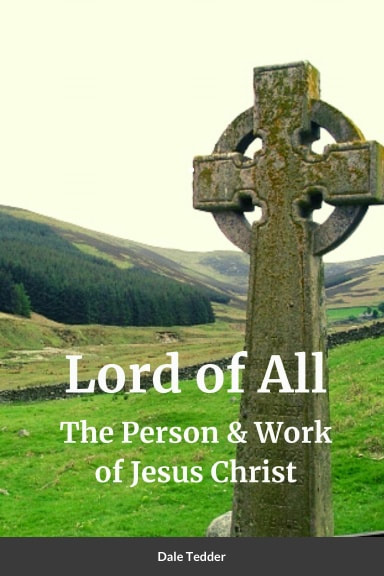
Click the image above to order this book and study guide about the most important person you will ever meet.
Archives
January 2024
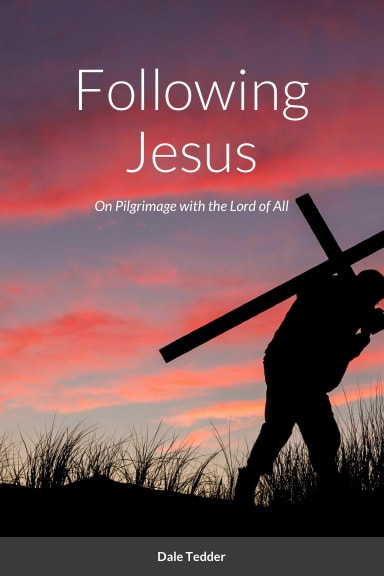
Click image above to learn more about and order this follow-up to "Lord of All."

Listen, my son, and be wise, and set your heart on the right path: (Proverbs 23:19)

“Enter by the narrow gate. For the gate is wide and the way is easy that leads to destruction, and those who enter by it are many. For the gate is narrow and the way is hard that leads to life, and those who find it are few.
(Matthew 7:13-14) 
|
 RSS Feed
